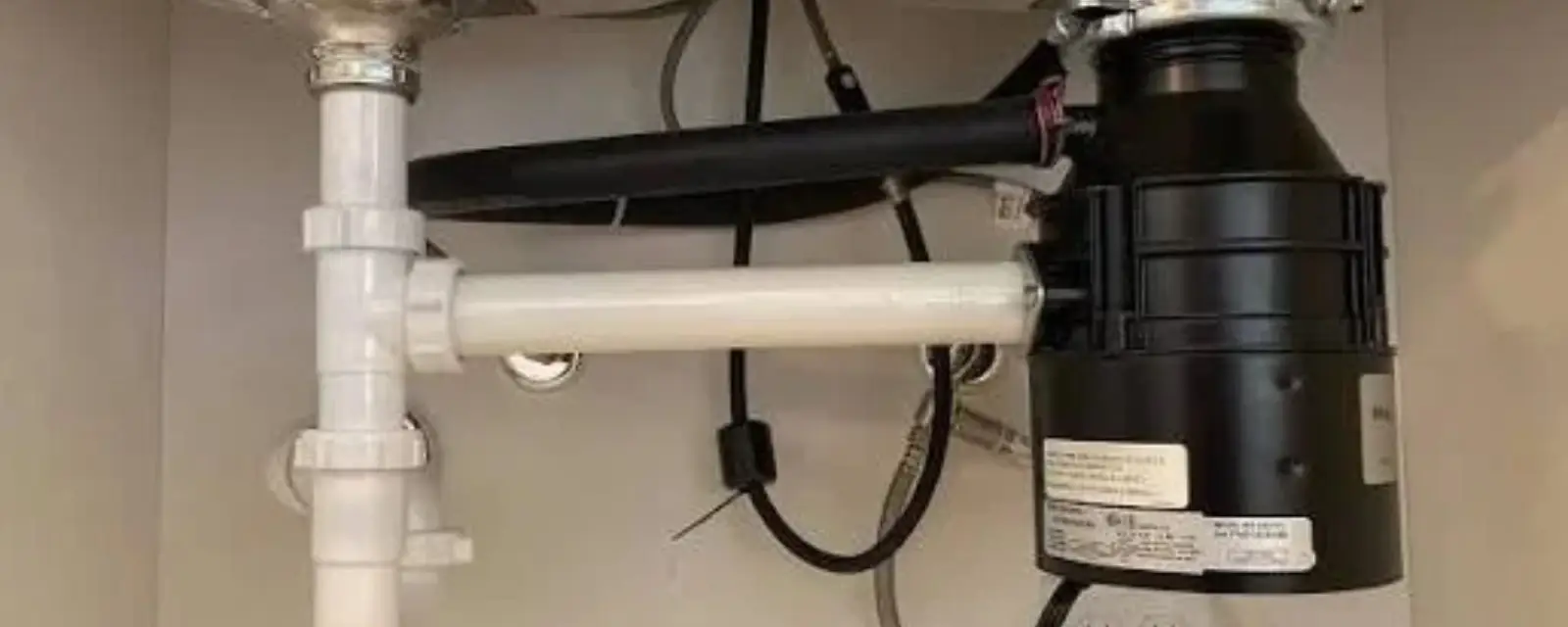
If your garbage disposal is leaking from the bottom, the housing has most likely failed, and the unit needs to be replaced. Before you decide, rule out the two leaks that look the same but are cheaper to fix: the top flange where the disposal meets the sink, and the dishwasher hose that drains into the side.
A short dry-towel test sorts all three in about ten minutes. This post walks Randolph, NJ homeowners through that test, explains what each result means, and covers what should never go down a disposal.
The dry-towel test that finds the real leak
Empty the cabinet under the sink and wipe everything dry, including the disposal body, the pipes, and the cabinet floor. Lay a dry paper towel or a sheet of newspaper under the unit so any new water shows up clearly.
Plug the sink and fill it with a few inches of water, then release it. Watch the top of the disposal first, then the pipes, then the bottom seam. Next run only the dishwasher, because that is a separate path and a separate suspect.
Take notes as you go. Which test produced the drip, and where did the first bead of water appear? That single answer decides the whole repair.
Where the water shows up and what it means
| Where it drips | Usual cause | Fix | Repair or replace |
|---|---|---|---|
| Under the sink flange at the top | Loose mounting ring or dried plumber's putty | Tighten the mount, or reseal the flange | Repair, usually |
| Side inlet where the dishwasher hose connects | Loose clamp or cracked hose | Re-clamp or replace the hose | Repair |
| Discharge pipe at the side | Loose gasket or worn drain fitting | Reseat the gasket, tighten the pipe | Repair |
| From the bottom seam of the housing | Failed internal seal or cracked housing | None that lasts | Replace |
| From the reset button area | Housing seam leak running down the case | Replace the unit | Replace |
Water runs downhill, so a top-flange leak can trail along the body and look like a bottom leak. That is why the dry test matters before anyone orders a new disposal.
What a leak from the bottom actually means
A disposal has a grinding chamber with a motor underneath, and a seal keeps water out of the motor housing. When that seal wears, water seeps along the shaft and out through the bottom seam. Once the housing leaks, tightening a nut will not cure it.
Water in the motor housing also shortens motor life, which is why a leaking unit often hums, jams, or trips its reset button before the leak becomes obvious. A cracked housing is the same story, and it often follows a long run of freezing or hard objects hitting the chamber.
We do not recommend running a disposal that is leaking from the bottom. Water near the motor and the electrical connection is a shock risk, so cut the power at the wall switch or breaker first.
Repair or replace: a simple way to decide
- Replace the unit when the leak is at the bottom seam, the housing is cracked, or the motor is jamming along with the leak.
- Repair the leak when water comes from the flange, the dishwasher hose, or a drain gasket, and the unit still runs quietly.
- Lean toward replacement if the disposal is old, noisy, and has needed repeated fixes, since a new unit comes with a fresh seal and a new mounting.
A plumber who removes the unit can also check the sink drain, the trap, and the dishwasher connection while everything is apart. That is cheaper than finding a second leak next month. Our garbage disposal repair and replacement visits include that check.
Randolph, NJ: sewer lines, septic tanks, and your disposal
Randolph's township sewer system includes 82 miles of sanitary sewers and 10 pumping stations, and the Route 10 area sits in the RVRSA service area. If your home connects to that system, scraps that slip past the disposal travel into the same pipes your neighbors use, so grease and fibers matter beyond your own drain.
Remaining un-sewered areas generally use individual septic systems. Morris County Health says the DEP recommends an average septic system be inspected and pumped every 3 to 5 years by a professional. A disposal adds solids to that tank, so a household on septic should be conservative with it and consider pumping on the shorter end of that range.
If you do not know whether your street is sewered or septic, ask the township before choosing disposal habits or a replacement unit.
Source type: Township Water/Sewer page and Morris County Health
What should never go down the disposal
Disposals grind soft food waste, not everything that fits through the opening. Grease and oil cool in the trap and the drain line, then harden into a plug. Coffee grounds, eggshells, and pasta clump into paste that sticks to pipe walls.
Fibrous scraps such as celery, corn husks, and artichoke leaves wrap around the shredder plate. Bones, fruit pits, and large chunks can jam the impellers and crack seals over time. Non-food items such as bottle caps and silverware cause the worst damage, and they are usually the reason a disposal hums but will not turn.
- Grease, oil, and fat
- Coffee grounds and eggshells in volume
- Potato peels, celery, and stringy vegetables
- Bones, pits, and shells
- Chemical drain cleaners, which can damage seals and splash onto skin
Safe steps while you wait for a plumber
- 1
Cut the power
Turn off the wall switch and the breaker, then unplug the unit if it has a cord.
- 2
Stop the water
Close the sink supply valves if the leak is constant, and avoid running the faucet.
- 3
Catch the drip
Place a pan or bucket under the unit and wipe the cabinet floor dry to protect the wood.
- 4
Photograph the leak
A photo of where the water starts helps us bring the right gasket, hose, or replacement unit.
When the leak is bigger than the disposal
If water keeps showing up after the disposal has been dry-tested, the leak may sit in the drain line or a supply valve. A slow sink with a wet cabinet also suggests a partial clog that forces water back out of loose joints.
In that case drain cleaning clears the line, and a fresh gasket completes the repair. We handle this kind of sink in Denville and in Dover as well as in Randolph.
Disposal leak questions, answered
The internal seal or the housing has usually failed, so water escapes along the motor shaft or through a cracked seam. That cannot be tightened away. Replacement is the normal fix.
Yes. Water from the top flange or the dishwasher inlet runs down the body and drips from the lowest point. Dry the unit and retest to find the true source.
No. Water near the motor and its electrical connection is a shock risk, and a wet motor wears out fast. Turn off the power and stop using the sink drain until it is fixed.
No. Putty and tape can help at the flange, but a seam in the housing has no repair that lasts. Sealant on the case only hides the leak for a short time.
If water comes from a gasket, a hose, or the top mount and the motor runs normally, repair is usually enough. If water comes from the bottom or the motor hums and jams, plan on replacement.
It can. Homes on a septic system add solids to the tank, so county health guidance on pumping every 3 to 5 years matters more. Ask the township whether your address is sewered, then talk to a plumber about habits and unit size.
Wet cabinet and a humming disposal? Call and tell us where the water starts.
Call (908) 357-1542Standards and sources used on this page
- Randolph Township Water and Sewer page and Utilities Element
- Morris County Health Management, septic system maintenance guidance