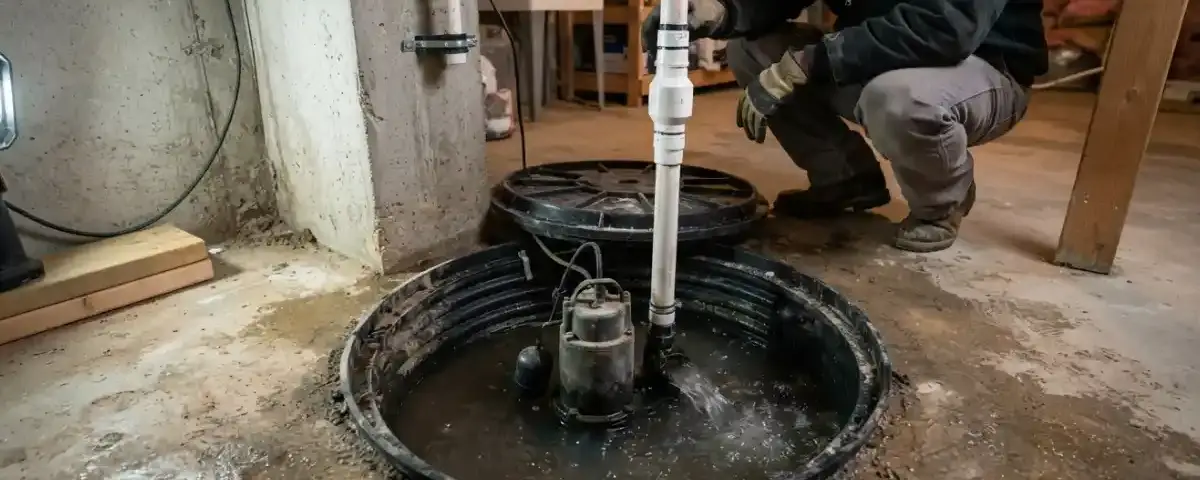
Sump pump repair in Randolph, NJ is about one machine doing one job: lifting water out of a pit in the basement floor and sending it outside before it reaches the slab. A sump pump sits in a basin, rises on a float switch when water comes in, and pushes the water up a discharge pipe past a check valve.
When it fails, nothing warns you. The basement is dry until the storm comes, and then it is not. We send licensed plumbers who test the pump, switch, check valve and discharge, repair what is salvageable, and replace what is not.
Basement taking on water right now
Water rising in the pit or spreading across the floor means the pump has failed, been overwhelmed or lost power. Stay out of the water if outlets, the panel or a furnace are nearby. Electricity and water do not mix, and a flooded basement is a shock hazard.
If the panel is in the wet area, do not go in. Call the line, tell the dispatcher what you can see from the stairs, and we plan the visit around it.
Water in the basement? Call the 24/7 line before it reaches the furnace.
Call (908) 357-1542While you wait for the plumber
1Check the power
If the cord is dry and reachable, make sure the pump is plugged in and the outlet or breaker has not tripped.
2Lift valuables
Move boxes, electronics and stored items onto shelves or the stairs.
3Do not wade in
If water touches outlets, appliances or the electrical panel, stay upstairs and call.
4Tell us the weather
Say whether it is raining, whether the pump ran earlier, and whether it ever shuts off.
Four faults that take a sump pump out
Stuck float
The float jams against the side of the basin, so the pump never starts or never stops.
Burned-out motor
A pump that runs dry or runs constantly for years eventually overheats.
Clogged intake
Silt, gravel and debris block the screen, and the motor strains.
Failed check valve
Water in the discharge pipe drops back into the pit and the pump cycles forever.
Rockaway River flooding and basements nearby
Morris County's hazard mitigation plan states that flooding along the Rockaway River occurs virtually throughout the entire length of the river within Denville Township. Denville is a nearby Morris County town, not Randolph. Still, if your house is low-lying or near a stream here, take the same view: a basement pump is not optional equipment.
For homes near Denville, the practical step is a pump that is tested before storm season, plus a backup that can run when the main pump or power fails.
Sump pump questions
A stuck float, a failed check valve or a high water table can keep the pump cycling. If it never stops, even in dry weather, call us. A pump that runs nonstop wears out fast.
The usual causes are a tripped breaker, an unplugged cord, a stuck float or a dead motor. Check the cord and breaker. If power is fine and water is rising, the pump needs service.
Yes. The 24/7 line takes calls any time, and a dispatcher sends a licensed plumber. Tell us if water is near the electrical panel.
It depends on the pump type, whether a switch or the whole pump fails, the pit and the discharge. You hear a clear price before work starts.
FEMA calls a battery backup an inexpensive safeguard against basement flooding. If your basement has flooded once, a backup pays for itself the second time.
No. We do the pump, pit, check valve, discharge and interior drain connections. Exterior sealing and foundation work belong to a waterproofing contractor.
Do not assume it can. Ask the Randolph Division of Water and Sewer first, because rules and capacity differ and a sump can overload a sanitary system.
Pit full, pump silent, or water already on the floor? Call now.
Call (908) 357-1542Waterproofing from the plumbing side
We are plumbers, not a waterproofing contractor. We do not dig exterior foundations, seal walls or regrade yards. What we do handle is the pump, the pit, the discharge line, the check valve and any interior drain that feeds the pit.
| Part of the system | Our work | Their work |
|---|---|---|
| Sump pit and pump | Install, repair, replace | None |
| Check valve | Install or replace | None |
| Discharge line | Repair, reroute, add a cleanout | Outside drainage design |
| Interior drain to the pit | Connect and test | Install the drain channel |
| Backup pump | Install battery or water-powered unit | None |
| Foundation cracks, wall sealing | Not our work | Primary work |
Backup pumps and check valves
FEMA's basement flooding guide calls a battery backup pump an inexpensive safeguard against flooding. It also warns that check valves can jam open with debris, which defeats their purpose. FEMA suggests asking local officials whether certain valves are permitted.
In practice, that means a second pump on its own float, a battery sized to run through an outage, and a check valve that gets inspected instead of forgotten. We can add all three to an existing pit.
Sump pump repair cost, explained
A float swap is a small visit and a new pit with a backup system is a bigger one. We explain the price on the phone and confirm it on site before work begins.
Switches and check valves are cheap fixes. A burned-out motor usually means a new pump.
Pedestal pumps, submersible pumps and battery backups differ in cost and lifespan.
A cracked or silted basin may need cleaning or replacement.
Longer or buried discharge lines that need repair add labor.
Many policies exclude groundwater seepage but cover some sudden pump or plumbing failures, often through a separate rider. Read your policy and ask your insurer about sump or water backup coverage.
Call the line and describe what the pit is doing.
Call (908) 357-1542Where the pump water is allowed to go
Pump water should go outside, away from the foundation, and not into the house drains. The township's sanitary sewers and septic systems are designed for household waste, and a sump pump can overload either one in a heavy rain. Ask the Randolph Division of Water and Sewer before connecting anything to a sanitary line.
If your home is on septic, stormwater in the tank can flood the drain field. If a basement floor drain has already backed up, sewer line cleaning looks at the main line, and a drain cleaning visit can open a clogged floor drain.
Water in the basement but the pump is fine
A pump that runs normally while the floor still gets wet means water is coming from somewhere else: a leaking pipe, a failing water heater, or a foundation crack. A bill that climbs while no one is home points the same way. Our leak detection service tracks these down with meters and sound equipment.
Standards and sources used on this page
- Randolph Township Water and Sewer page and Utilities Element
- FEMA guide to reducing basement flooding