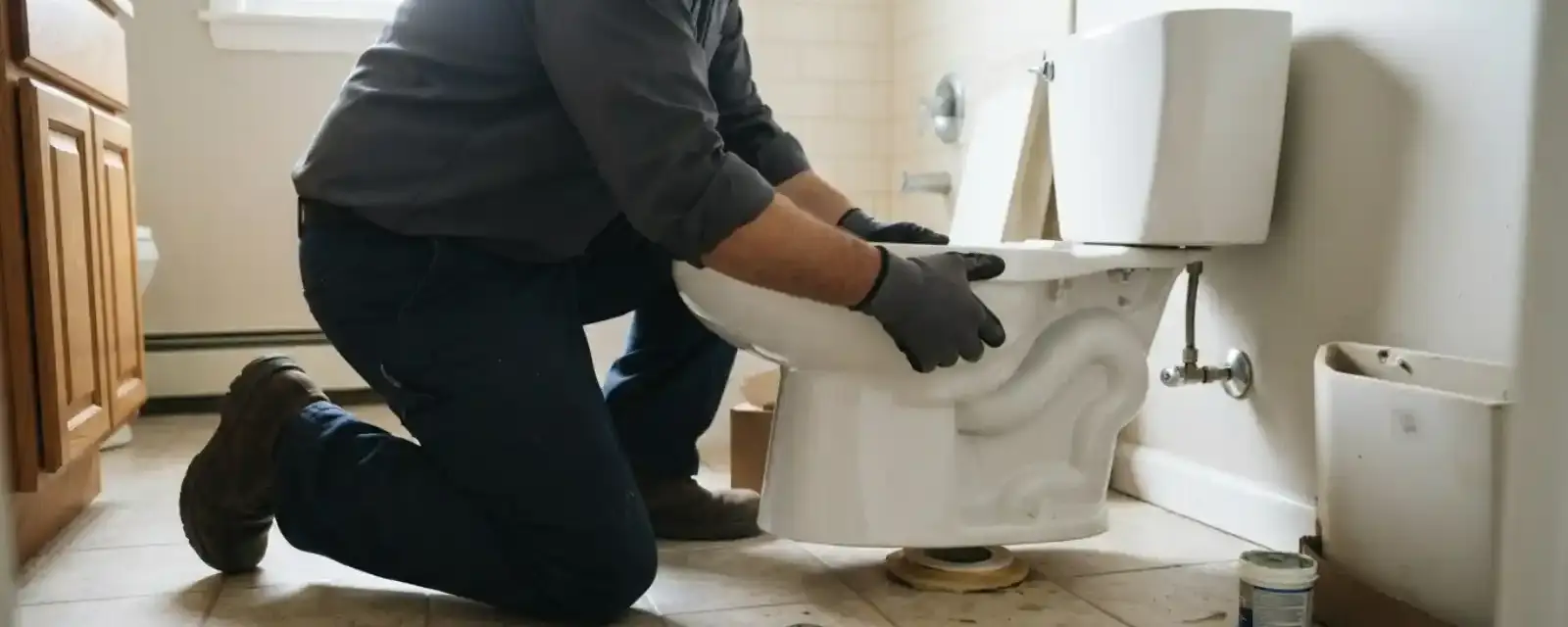
A toilet that keeps clogging is rarely just unlucky. Repeat clogs come from one of four places. The toilet itself has weak flush power, something is going down that should not, the drain line behind it is partly blocked, or the main line or septic system is struggling. In Randolph, NJ, sorting out which one it is saves you from plunging the same bowl every weekend.
This guide starts with what the symptoms mean, then covers what not to flush, how to use a plunger and an auger properly, and the signs that the problem is bigger than the bowl.
Read the symptoms before you grab the plunger
Where the clog shows up tells you how deep it is. If only one toilet is slow and the sink and shower beside it drain fine, the blockage is in that toilet or its short branch. If the tub gurgles when you flush, or a basement floor drain bubbles, the problem sits farther down the line.
| What you see | Most likely cause | First move |
|---|---|---|
| One toilet, weak flush, slow swirl | Blocked rim jets or partial trap clog | Plunge, then clean the jets |
| One toilet, clogs with normal use | Low water in bowl or a worn flapper | Check tank level and flapper |
| Toilet clogs and tub gurgles | Branch line blockage | Auger or professional drain cleaning |
| Several fixtures slow or backing up | Main drain or sewer line problem | Stop using water and call |
| Clog plus sewage smell in yard | Septic or sewer trouble | Call, do not keep flushing |
Causes of a toilet that clogs again and again
Weak flush
Older and low-flow toilets can lose power when mineral scale blocks the rim jets or the siphon hole. The bowl then empties slowly and lets waste stall in the trap.
Too much paper
Thick or large amounts of tissue can overwhelm even a healthy toilet. It is the most common household cause, and the easiest to change.
Wrong items
Wipes, hygiene products, paper towels and cotton balls do not break down the way toilet paper does. They hang up in the trap and snag everything that follows.
Problem downstream
Roots, a bellied section of pipe or buildup on the walls of the drain can cut flow. The toilet then clogs because the line behind it cannot carry the load.
What should never go down the toilet
Toilet paper and human waste are the only two things a toilet is built to move. Flushable wipes are labeled that way, but they often fail to break apart in the pipe. Treat the label with doubt.
- Wipes of any kind, including those sold as flushable
- Feminine products, diapers and cotton swabs
- Paper towels, tissues and dental floss
- Cat litter, even the kind sold as flushable
- Grease, cooking oil and medications
A household with young children or a guest bathroom that sees irregular use benefits from a small covered wastebasket beside the toilet. It costs little and removes the temptation.
Plunger or auger: which tool for which clog
A flange plunger, the kind with a rubber lip that folds out, seals better in a toilet than the flat cup type. Fill the bowl enough to cover the cup, seat it, and push gently first to push out the trapped air. Then pull and push with steady strokes for about a dozen cycles.
A closet auger, which has a short cable and a curved guide, goes where a plunger cannot reach. Feed it into the trap, turn the handle and pull back any plug it catches. Skip chemical drain openers. They rarely fix a toilet clog, they can damage fittings, and splashing caustic liquid is a hazard if the bowl then has to be cleared by hand.
Randolph, NJ: sewer service, septic and the running toilet
Randolph's sewer system covers 82 miles of sanitary sewers and 10 pumping stations. The service area for the Route 10 corridor is on the RVRSA side, while the southern half along Sussex Turnpike is served through the Butterworth area. If several drains back up at once, ask the township sewer office whether a public line is involved before you assume the fault is inside your walls.
Parts of Randolph are not sewered and use septic systems instead. Morris County Health relays DEP guidance that an average septic system should be inspected and pumped every 3 to 5 years by a professional. A toilet that clogs more than usual on a septic property can mean a full tank or a stressed drain field, so a pump-out history is the first thing to look up.
One related note on water use. The township's high water bill page names a continuously running toilet as the most common cause of surprise bills, and a faulty flapper or fill valve is behind most of them. If your toilet clogs and runs, the tank parts need attention as well, and a toilet repair visit covers both.
Source type: Township utility pages, Morris County Health and NJ DEP guidance
A simple ladder for repeat clogs
- 1
Check the basics
Confirm the tank fills to the marked line and that the flapper seals. Low water in the bowl means less force on each flush.
- 2
Clear the trap
Use the flange plunger first and the closet auger second. If the bowl drains with a strong swirl afterward, the fixture is clear.
- 3
Test the neighbors
Run the sink and shower beside the toilet. Any gurgle or slow drain means the clog sits in the branch line, not the bowl.
- 4
Call before it escalates
Two clogs in a month, a gurgling tub or a sewage smell all justify a camera look. A drain cleaning visit finds the cause instead of treating the symptom.
When the problem is the sewer line
Tree roots slip into small joints in older clay or cast iron pipe and grow into a mass that catches paper. Homes with a long run to the street or a past history of backups are the usual candidates. You may also hear gurgling after laundry or see water rise in a floor drain.
A camera inspection shows the cause. Cutting heads on a drain machine can clear roots and buildup, and a sewer line cleaning is the right step when more than one fixture is affected. If the pipe is cracked or collapsed, the conversation shifts to lining or replacement, and the camera video helps you decide.
Local help for stubborn clogs
Our crews work Morris County neighborhoods daily. Homeowners in Roxbury and in Rockaway Township call about the same pattern, a toilet that works for a week and then clogs again. When that happens, we look at the drain behind it, not just the bowl.
A repair visit by our toilet repair team covers the fixture. Add a drain cleaning when the branch line is involved, and sewer line cleaning when the main line is.
Toilet clog questions
The plunger may have cleared the bowl but not the cause. A weak flush, a partial blockage deeper in the trap or a stressed branch line will bring the clog back. Test other fixtures and look at the water level in the tank.
It can be. If only one toilet clogs, the fixture is the usual suspect. If the tub gurgles or other drains slow down at the same time, the main line is likely involved.
Yes. They are slower to break down than toilet paper and tend to catch in the trap or in rough pipe joints. Over time they build up with paper into a plug.
No. Chemical openers seldom reach the blockage in a toilet, can damage seals and make later hand clearing hazardous. A plunger or a closet auger is the safer tool.
If the toilet is overflowing, sewage is coming out of a floor drain or several fixtures are backing up, stop using water and call. Do not keep flushing.
It might be. Un-sewered parts of Randolph rely on septic systems, and county health guidance is for a professional inspection and pumping every 3 to 5 years. If it has been longer, schedule that before replacing any toilet.
Plunged it twice and it is back? Call and tell us what the other drains are doing.
Call (908) 357-1542Standards and sources used on this page
- Randolph Township, Common Causes for High Water Bills page
- Randolph Township Water and Sewer page and Utilities Element
- Morris County Health Management, septic system maintenance guidance