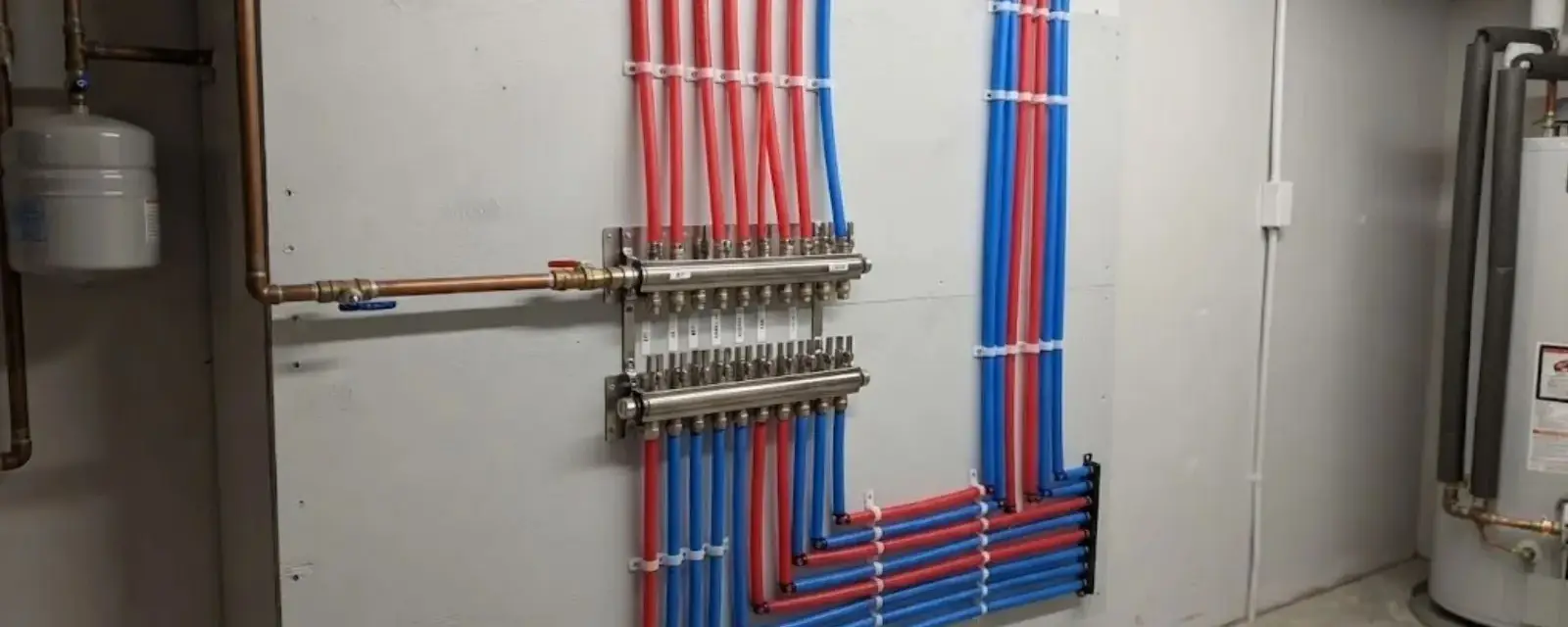
Repiping means replacing the water supply pipes in a house, either the whole system or a long run of it, rather than patching one leak at a time. Homeowners in Randolph, NJ usually start thinking about it after a second or third leak in the same area, rusty or discolored water, or low flow that a fixture swap did not cure.
It is a bigger decision than a repair, so it deserves a straight conversation about what is wrong, what the options are and what you can do in stages. Our team lays that out before you commit to anything.
Signs a repipe makes more sense than another repair
One leak is a repair. A pattern is a reason to look at the whole line. The signs below, especially in combination, tell us a section of pipe is wearing out from the inside.
- Leaks that keep returning in different spots on the same line
- Water that runs brown or rust-colored when it has been sitting
- Pressure that has dropped across the whole house over time
- Green or white crust, pitting or flaking on exposed pipe
- Visible patches and clamps from past repairs on the same run
If you are seeing active leaks now, our burst pipe repair team can stop the damage first, and the bigger repiping question can wait until things are dry.
Galvanized pipe replacement
Galvanized steel is iron pipe with a zinc coating. Over decades the coating fails, rust forms inside, and the opening narrows until pressure drops and the water picks up color. The pipe can also leak at threaded joints.
We do not assume what any Randolph house is piped with, and a home's age is not proof of its pipe material. If you suspect galvanized lines, ask us to look at the pipe in the basement or utility area and tell you what we see. A magnet and a scratch test on exposed pipe can give a first clue, and we can confirm it.
Pipe materials compared
Each material has real strengths and real limits. We explain which suits your house and what the local permit office needs before settling on one.
| Material | Strengths | Trade-offs |
|---|---|---|
| Copper | Long track record, handles heat well, solid and rigid | Costs more in material, soldered joints take skill and time |
| PEX | Flexible, so it snakes through walls with fewer fittings | Must be protected from sunlight, joints rely on crimp or expansion fittings |
| CPVC | Rigid plastic, resists corrosion, lower material cost | Glued joints, more brittle if mishandled or exposed to cold |
| Keep and patch existing | No wall work now | Does not solve widespread wear, repairs can return |
We do not state which plastic pipes any particular town's code accepts, because that depends on the local enforcing agency. We confirm with the construction office as part of planning your job.
How a repipe is done
- 1
Walk-through
We trace the supply lines, check shut-offs and pressure, and note where walls or ceilings must open.
- 2
Plan and price
You get a written scope, the material choice and a clear price before work begins.
- 3
Permit steps
We tell you what the township needs and who submits what, so nothing stalls the job.
- 4
Replace the lines
Water is shut off, old pipe is removed and new pipe is run and connected to fixtures.
- 5
Test and restore
The system is pressure tested before walls close, then you decide on patching and paint.
Most of the work happens in basements, closets and ceilings, though some walls do open. A house is without water for part of the day, so we plan around that.
Permits for replacing house piping in Randolph
The township's Office of Construction Codes says plumbing changes, including changing piping, need a construction permit and zoning approval. The plumbing subcode form is signed and sealed by a licensed plumber, unless the work is done by a homeowner in an owner-occupied single-family dwelling. The township asks you to call during planning, which is the right time.
New Jersey's plumbing subcode is the National Standard Plumbing Code, 2021 edition, New Jersey edition. For a repipe, that means the work is inspected against a set standard, so the permit is not a formality. We explain the sequence, then you or we take the steps the township requires.
Lead, service lines and what a repipe does not cover
Randolph's lead results for the water system were below the action level in 2023. A repipe inside your house does not change the water service line from the curb to the house, which the homeowner owns. If you are concerned about lead from an older service line or fixture, ask us to look at it during the walk-through.
Replacing worn interior supply pipe will not change what the utility delivers. It can fix rust-colored water and weak flow caused by the pipe itself.
Randolph homes and when to plan ahead
Township data counts 9,356 housing units, with about 54 percent built before 1980 and about 33 percent before 1970. A house in that group has had decades of water pressure, thermal cycling and fixture changes. That makes a planned inspection a smart move before a leak forces the issue, since a repipe done on your schedule is easier than one done during a flood.
If a leak ever involves the buried line, a water line repair visit looks at that section, and a repipe covers the pipes indoors. We work with homeowners across Morris Township and nearby towns on the same basis.
Repiping in stages
You do not always need the whole house at once. A kitchen and bath group, one floor or the basement main run can be replaced first if the budget calls for it. We will tell you which section matters most and what staging does to the permit and the total price.
The trade-off is more visits and more openings in the walls. If your house has many problem spots, doing it in one project is usually cleaner.
What drives a repiping quote
Repiping is quoted from a walk-through, not over the phone, because the house decides the work. You see the scope and the price in writing before anything starts.
More bathrooms, sinks and appliances mean more pipe and more connections.
Copper, PEX and CPVC differ in material cost and in installation time.
Open framing is quick. Finished plaster, tile and tight crawl areas add time.
A multi-level house with long vertical runs takes more planning than a single level.
Drywall repair and paint are separate from the plumbing and can be done by your own contractor.
Insurance generally pays for sudden damage, not for replacing pipes that are simply old. Some policies pay for the leak damage but not for the repipe itself. Review your policy, and ask your agent how it treats a pipe failure.
Call to schedule a walk-through and get the written scope and price.
Call (908) 357-1542Repiping questions homeowners ask
Consider it after repeated leaks in the same area, rusty water, steady pressure loss or visible corrosion. One leak alone is usually a repair.
Galvanized pipe is gray steel with threaded joints. A magnet sticks to it, and a scratch shows silver-gray metal. Ask us to look, and we will tell you what we find.
The number of fixtures, material, wall access and layout drive the price. We give a written scope and a clear price after a walk-through.
The township says plumbing changes, including changing piping, need a construction permit and zoning approval. Call the Office of Construction Codes while you plan, and we explain the process.
Water is shut off while lines are connected, but not for the entire project. We plan the day so you have water back at the end where possible.
If narrowed or corroded interior pipe is the cause, yes. If the cause is the service line, a regulator or a fixture, it will not, which is why we diagnose first.
Yes. A single floor, a bath group or a main run can be done on its own. The trade-off is more work in more visits.
Want an honest opinion on whether your pipes need replacing? Call and book a walk-through.
Call (908) 357-1542Ready to talk it through?
Call our line and tell the dispatcher you want a repiping walk-through.
Call nowStandards and sources used on this page
- Randolph Township, Office of Construction Codes, construction permits page
- N.J.A.C. 5:23-3.15 and NJ DCA code adoption table (National Standard Plumbing Code, 2021 edition)
- Randolph Township Housing Element (ACS 2020 tables)