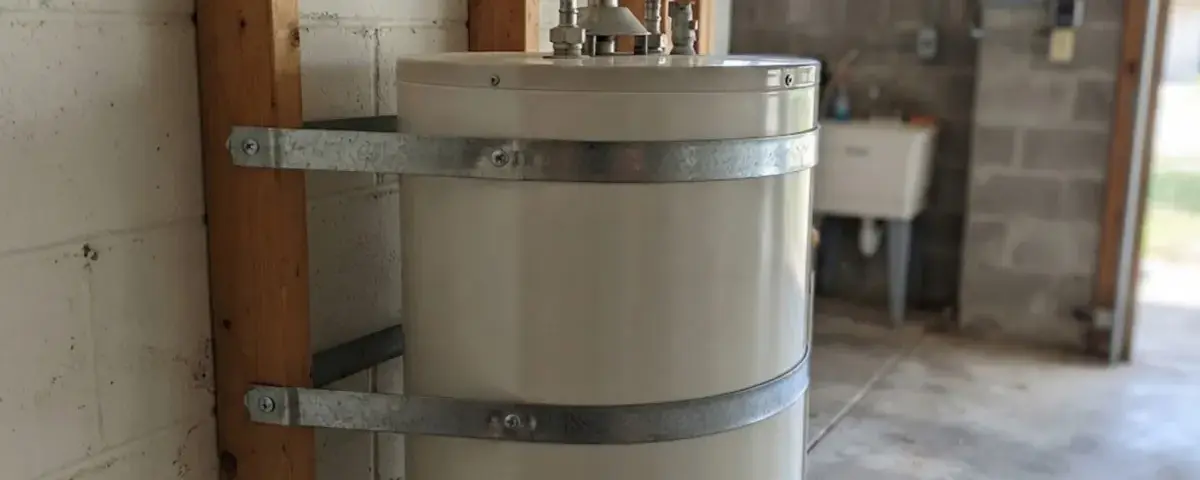
In New Jersey, a handyman generally cannot legally install a water heater for a homeowner. The state's plumbing rules say plumbing work is to be performed by a master plumber, an authorized plumbing contractor, or employees working under a master plumber's supervision. A water heater connects to the water supply, the drain or relief piping, and often to gas and a vent, so it sits squarely inside that definition.
That answer shapes the rest of the job in Randolph, NJ. It changes who pulls the permit, who is responsible if something fails, and what your insurer may say afterward.
The verdict, in three lines
- A licensed plumber installs the water heater.
- A homeowner may do plumbing in his or her own dwelling, with permit rules still applying.
- A handyman without plumbing credentials is the wrong hire for this job.
The rest of this page explains why each line holds, and where the exceptions are.
Randolph, NJ: the licensing rule and the permit step
The state rule, N.J.A.C. 13:32-1.4, says plumbing shall only be performed by a master plumber, an authorized plumbing contractor, or employees under a master plumber's supervision. A single-family homeowner may do plumbing in his or her own dwelling. Unlicensed people may clear drain stoppages through a cleanout and do a few other listed jobs, but replacing a water heater is not on that list.
Randolph's Construction Permits page says water heater replacement needs a construction permit, and no zoning approval is required for a water heater. The plumbing subcode form is signed and sealed by a licensed plumber unless a homeowner is doing the work in an owner-occupied single-family dwelling. State guidance exempts ordinary maintenance and routine repair from permits, but a replacement is not a routine repair, so plan on the permit and call the Office of Construction Codes during planning.
Check any plumber yourself. The Division of Consumer Affairs runs a License Verification System at njconsumeraffairs.gov/pages/verification.aspx. Look up the name and license before anyone touches your heater.
Source type: N.J.A.C. text, NJ DCA guidance and Randolph Construction Permits page
What a water heater swap actually involves
- 1
Shut off fuel and water
The gas valve or electric breaker goes off, and the cold supply to the tank closes.
- 2
Drain and disconnect
The tank is drained, then the supply, hot outlet, vent and relief piping are disconnected.
- 3
Set and connect the new unit
The heater is leveled, the water lines are reconnected, and the vent is attached with the right pitch and joints.
- 4
Test and document
Leak check, gas check if applicable, combustion and draft test, relief valve and thermostat setting, then the permit inspection.
Gas and venting: why this is not a casual job
A gas water heater burns fuel and sends exhaust up a vent. A loose flue joint, a wrong slope or a missing connector can let carbon monoxide into the house. Gas connections that are slightly off can leak, and a small leak is easy to miss.
New Jersey Natural Gas has installed or is installing main in parts of Randolph, but not every address has natural gas. Homes here may run on gas, oil or propane, and each fuel has its own piping and venting rules. If you ever smell gas, leave the building first, then call the gas utility or 911 from outside, and call the plumber only after that.
Handyman, homeowner or plumber: who can do what
| Who installs | Allowed under state rule? | Permit and inspection | Risk if something fails |
|---|---|---|---|
| Licensed plumber | Yes | Permit pulled, form signed and sealed by the plumber | Work traceable to a licensed contractor |
| Homeowner, own owner-occupied house | Yes, for own dwelling | Permit still required, homeowner signs where allowed | You carry the full responsibility |
| Handyman without plumbing license | No, not for plumbing work | Plumber must sign and seal the form, so a handyman cannot | Permit trouble and insurance questions |
| Friend or neighbor, unlicensed | No, unless homeowner exception applies | Same as above | Unclear liability if a leak or CO event occurs |
Insurance and resale: the quiet costs
If an unpermitted installation leaks or a vent fails, your homeowner policy may not respond the way you expect. Policies differ, so read yours or ask your agent whether permitted, licensed work is a condition. Do this before the job, not after the claim.
The permit also protects resale. A buyer's inspector or attorney may ask for the permit and final inspection on a replaced water heater, and a missing record becomes a negotiating point in a sale.
How to verify a plumber before you book
- Ask for the plumber's name and license number, then check it on the DCA License Verification System.
- Ask who pulls the permit and who is on site for the inspection.
- Ask whether the quote covers the vent, the relief piping, the old tank haul-away and the permit.
- Ask for a clear price before work starts, in writing if possible.
A real plumber answers these without hesitation. A vague answer on permits is a reason to move on.
Getting a licensed install in Randolph
Our team handles a standard water heater installation and a like-for-like water heater replacement, including the permit steps. We serve Denville and Roxbury homeowners as well. Tell us the age of the tank and the fuel, and we will explain what the job involves.
If the tank is leaking now, shut off the water to the heater and the fuel, and call the 24/7 line.
Water heater hiring questions
State rules reserve plumbing work for master plumbers, authorized plumbing contractors and their supervised employees, with a homeowner exception for his or her own dwelling. A handyman without those credentials should not do it.
A single-family homeowner may do plumbing in his or her own dwelling. A construction permit is still required in Randolph, and gas and venting make this a poor DIY job.
Randolph's permit page says yes, a construction permit is required, and zoning approval is not. Call the Office of Construction Codes during planning.
Use the Division of Consumer Affairs License Verification System at njconsumeraffairs.gov/pages/verification.aspx and search the name or license number.
Gas, oil and propane heaters each have their own piping and venting needs. All of them are plumbing work under the state rule, and gas adds further hazards.
No. The township says water heater replacement needs a construction permit but no zoning approval. Other plumbing modifications are different and can need both.
Not sure what your heater needs? Call and tell us the fuel type and the age of the tank.
Call (908) 357-1542Standards and sources used on this page
- Randolph Township, Office of Construction Codes, construction permits page
- N.J.A.C. 13:32-1.4, plumbing practice rules
- NJ Division of Consumer Affairs, license verification system
- NJ Korman and Park's Law, P.L. 2015, c.146
- PSEG public safety guidance on gas leaks (used as a general reference)