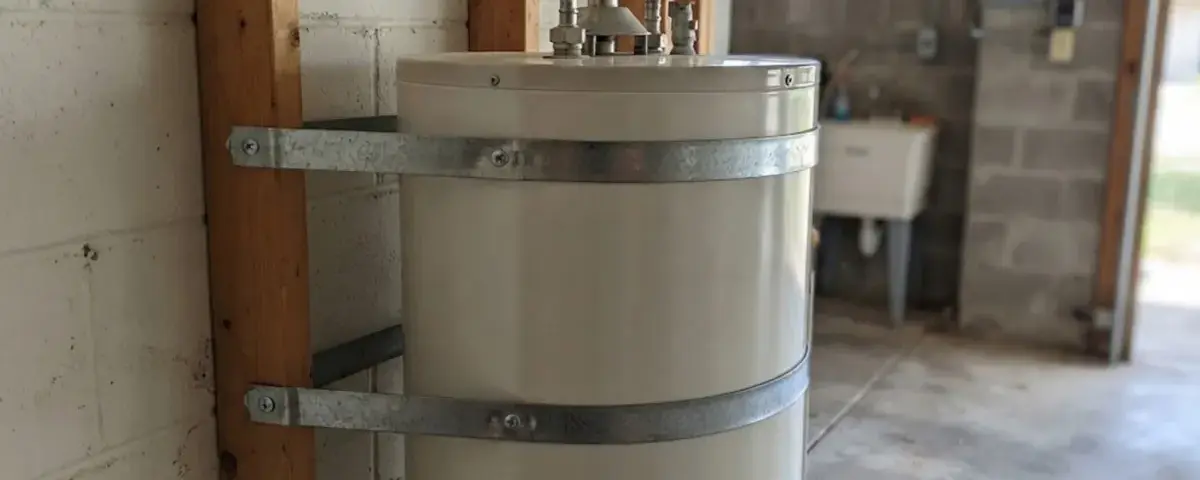
Water heater installation in Randolph, NJ covers choosing the right type of unit, running its water, fuel or electrical connections, venting it where required, and getting the township permit sorted. It applies to a first install in a new space, a switch from one fuel to another, or an upgrade you plan ahead of any failure.
Planning ahead gives you room to compare options calmly. Call us and we talk through the house, the fuel you already have and what the township office will want to see.
Gas, electric or heat pump tanks
The fuel you can use usually decides the shortlist. Randolph homes run on natural gas, oil, propane or electricity, and New Jersey Natural Gas has been installing gas main in parts of town, though it does not serve every address. Ask us to check what your house has before picking a model.
| Type | How it heats | What to know |
|---|---|---|
| Gas tank | Burner under the tank, exhaust through a vent | Needs a gas supply and a safe vent path |
| Electric tank | Heating elements inside the tank | Needs a dedicated circuit, no combustion vent |
| Heat pump (hybrid) tank | Pulls heat from surrounding air, with electric backup | Needs floor space, clearance and a drain for condensate |
What an installation includes
- Site check of the location, floor, drainage and clearances
- Supply connections with new shutoff valves where needed
- Temperature and pressure relief valve with a proper discharge pipe
- Fuel or electrical hookup matched to the unit
- Venting for gas and oil units
- Fill, purge, leak test and thermostat setting
- Permit steps handled with the township
Anything outside that list, such as moving the heater to a new room, adds pipe runs and sometimes electrical or gas work. We spell that out before starting.
Venting and gas lines are not the place to cut corners
A gas or oil heater has to carry exhaust out of the house. A vent that slopes the wrong way, has gaps, or is blocked can push combustion gases into the home. Because carbon monoxide has no smell, New Jersey law requires CO alarms in existing covered structures unless there is no CO hazard, and a new gas unit is a good time to test yours.
Suspect a gas leak at any point and leave first. Move well away from the house, then call the gas utility or 911 from outside. Do not flip switches or start a car nearby.
Permits, plumbers and who can do the work
State rules say plumbing is done by a master plumber, an authorized plumbing contractor, or employees working under a master plumber's supervision. A single-family homeowner may work on his or her own dwelling. In Randolph, a water heater needs a construction permit through the Office of Construction Codes, and no zoning approval is involved.
The plumbing subcode form is signed and sealed by a licensed plumber unless an owner-occupant is doing the job. Because the township asks people to call during planning, scheduling a visit early helps. You can also check any plumber's license through the state Division of Consumer Affairs verification system.
How a planned install runs from first call to hot water
- 1
First call
Tell the dispatcher your fuel, the current heater if any, and who lives in the house.
- 2
Site visit
The plumber measures the space, checks venting and fuel supply, and talks through unit choices.
- 3
Permit and scheduling
The permit is filed and a work date is set, with the old unit removal included.
- 4
Install and test
We set the heater, connect everything, test each joint and walk you through the shutoffs and the thermostat.
What moves the price of an installation
Pricing depends on your house, so we do not post figures. After the site visit you get a clear price before work starts, and if the scope changes you hear about it first.
Switching from electric to gas or the reverse adds new supply lines or circuits, and sometimes venting.
Heat pump models carry a different equipment cost than standard tanks and need clearance and a condensate drain.
An old or undersized flue may need replacement to meet current practice.
A heater moved away from its old spot needs longer pipe runs.
Relief valve piping, expansion control or shutoff valves may need updating as part of the job.
Planned upgrades are normally not an insurance matter, but if you are replacing a unit after water damage, ask your insurer what documentation they want before the old tank leaves the house.
Ready to price your setup? Call and describe the space.
Call (908) 357-1542Moving from a gas tank to a heat pump unit
A gas-to-heat-pump change is mostly an electrical and space question. The new unit needs a circuit, a spot with enough air around it, and a place to send condensate. The old gas line is capped and the vent is removed or sealed by a licensed professional.
If the house has little room, a standard electric tank or a gas replacement may fit better. We lay out what works in your space and let you pick.
Replacing, upgrading or going tankless
If your current tank has already failed, emergency water heater replacement gets the old one out fast. Homeowners who want endless hot water can read about tankless installation, and if a new heater means rerouting pipes, our plumbing installation crew can handle that side. If you live toward Roxbury, our Roxbury service page shows the same dispatch applies there.
Questions before you install
Start with the fuel your home already has, then think about space and hot water use. A gas or electric tank is the simplest. A heat pump tank suits a house with room around it.
Most straightforward swaps finish in a single visit. Moving the heater, changing fuel or fixing venting adds time, and the plumber tells you at the site visit.
Fuel, unit type, venting, location and any code updates needed. A clear price comes before the work starts.
Often yes, if you have an electrical circuit available and space for airflow and condensate drainage. The gas line gets capped by a licensed pro.
Yes. The Office of Construction Codes requires a construction permit, with no zoning approval needed for a water heater.
New Jersey sets hot water between 120 and 140 degrees F. Federal safety guidance urges 120 to reduce scald risk.
State rules limit plumbing to licensed plumbers and their employees, with an exception for homeowners working on their own single-family dwelling. You can verify a plumber's license on the state consumer affairs site.
Want it planned before the old tank quits? Call and we set a visit.
Call (908) 357-1542Standards and sources used on this page
- Randolph Township, Office of Construction Codes, construction permits page
- N.J.A.C. 13:32-1.4, plumbing practice rules
- NJ Division of Consumer Affairs, license verification system
- U.S. Consumer Product Safety Commission, tap water scald guidance
- NJ Korman and Park's Law, P.L. 2015, c.146
- PSEG public safety guidance on gas leaks (used as a general reference)