You need your drains cleaned when water drains slowly, the pipes gurgle, a sour odor lingers, more than one fixture acts up at once, or a clog returns soon after you clear it. Any one of those can be a nuisance. Two or more together usually mean buildup or a partial blockage that will not fix itself.
This checklist is written for Randolph, NJ homes, many of them decades old. Score your own house, read what each sign points to, and decide whether it is a job for a plunger and a weekend or for a cleaning with proper equipment.
Score your house in two minutes
Give yourself one point for each statement that is true today. Be honest, since a drain problem is easiest to fix when it is small.
| Sign | What is happening in the pipe | Points |
|---|---|---|
| Water drains slowly in a sink, tub or shower | Buildup is narrowing the pipe | 1 |
| Gurgling after a drain or flush | Air is pulled through a partial blockage or a vent is restricted | 1 |
| A lingering sour or sewage odor | Film, trapped debris or a dry trap | 1 |
| More than one fixture is slow or backing up | The blockage is in a shared line | 2 |
| The same clog returns within weeks | Buildup or roots remain after a surface clearing | 2 |
| Fruit flies or drain flies around a drain | Organic film inside the pipe or trap | 1 |
| Water rises in one fixture when another drains | The main line is restricted | 2 |
Add it up. Zero or one point can be a simple clog at one fixture. Two or three points means schedule a cleaning soon. Four or more, or any sign of sewage coming up, means call now and stop using water until the line is checked.
Slow drains that never quite clear
A drain that works but takes its time is the earliest sign. Soap, hair, grease and mineral film coat the pipe wall and shrink the opening, so water that once fell freely now crawls. Plunging helps for a few days, then the slowness returns because the coating is still there.
A slow single fixture is often a local problem you can handle with a plunger or a hand tool. A slow tub that sits next to a slow sink is another story, because they share a line.
Gurgling, bubbling and odd sounds
Pipes talk when air cannot move the way it should. Gurgling after a sink drains, bubbling in a toilet when the washer runs, or a hollow glug from a floor drain all suggest a partial blockage or a vent that is not doing its job.
Treat it as a message, not a quirk. Sounds usually show up days or weeks before a full backup. A cleaning at that point is cheaper and cleaner than the one after the water arrives.
Odors and the small flies that come with them
A sour smell at a drain means organic film is feeding bacteria inside the pipe. Tiny drain flies or fruit flies hovering near a sink are a further sign, since they breed in that slimy layer. Refilling a dry trap helps if the fixture is rarely used, but a smell at a busy drain points to buildup.
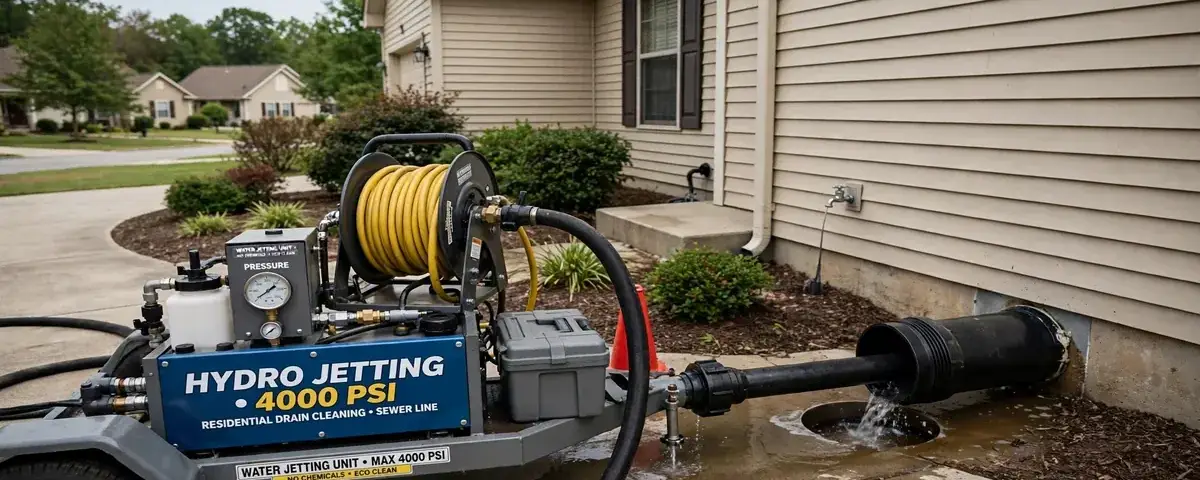
For stubborn buildup, hydro-jetting scours the pipe wall with high-pressure water rather than punching a narrow hole through the middle. It is the right tool when a cable has cleared the clog but the smell and the slowness come back.
Randolph, NJ: older homes and septic homes read the signs differently
The township's Housing Element counts 9,356 housing units, and about 54 percent, or 5,036 units, were built before 1980. About 33 percent, or 3,103, predate 1970.
A house's age does not tell you what its pipes are made of. It does mean more years of buildup in drain lines and more chances for old joints to catch roots. If your home is in that group and you see two or more signs, ask for a camera look instead of repeated quick fixes.
The township system has 82 miles of sanitary sewers and 10 pumping stations. Remaining un-sewered areas are generally on individual septic systems regulated by the township health department and NJDEP.
Morris County Health relays the DEP recommendation that the average septic system be inspected and pumped every 3 to 5 years. On septic, slow drains at several fixtures can point to the tank or drain field rather than the pipes, so check your pumping record before paying for line cleaning.
Source type: Township Housing Element, Township Water and Sewer page, Morris County Health guidance
When several fixtures act up together
One slow drain is local. Two or three slow drains, or a toilet that bubbles when the shower runs, mean the blockage is in the branch or main line they share. The lowest fixtures in the house show the problem first, which is why basement drains and ground-floor tubs often give the first warning.
At that point, a plunger and a bottle of cleaner are not the plan. Stop heavy water use and call. Our drain cleaning service uses a cable machine matched to the pipe and, when needed, a camera to see what is in the line.
Clogs that keep coming back
A clog that returns within weeks was usually not removed. A cable can poke a hole through grease or roots, and the drain runs for a while, then the leftover material builds up again. Root growth, a sagging section of pipe or a rough joint will keep catching debris.
Ask for a camera inspection when the same fixture clogs three times in a season. It is easier to repair a known problem than to keep paying to clear it. The honest trade-off is that a camera adds time, but it ends the guessing.
When a cleaning can wait and when it cannot
- Can wait a few days: one slow fixture, no odor, no gurgling, no other fixtures affected
- Book soon: two points or more on the checklist, repeat clogs, a persistent odor
- Call now: sewage or dirty water coming up, water near electrical equipment, every drain slow at once
What to do and what not to do with a slow drain
A slow drain is a warning, and the first things you try can make the next step harder or unsafe.
- Stop running water into a drain that is backing up. Every flush adds to the overflow.
- Do not pour chemical drain cleaners into a standing, fully blocked drain. The liquid sits there, and a plumber or you may have to work around it.
- Never mix drain cleaners with each other or with bleach. The fumes can be dangerous.
- Wear gloves around backed-up water and keep children and pets away from sewage.
- If several fixtures back up at once or sewage reaches a floor drain, call for a plumber instead of snaking it yourself.
Questions about drain cleaning signs
There is no single schedule. Kitchen lines with heavy grease use may need attention sooner than a guest bath. Watch for the signs in this checklist and clean when they show up, not on a calendar.
Often, yes. Small flies breed in the slimy film inside a drain or trap. If fruit is not the source and the flies return after cleaning the sink area, the pipe interior needs attention.
Gurgling means air is being pulled through a partial restriction. The line still moves water, but a full blockage may be forming. It is a good time for a cleaning.
It can clear a soft local clog. If the slowness returns in days or weeks, the coating on the pipe wall is still there and a cleaning will do more than another plunge.
A cable machine cuts through a stoppage. Hydro-jetting uses high-pressure water to scour the pipe wall and remove grease and scale. We choose based on the pipe and what the line contains.
It could be the pipes or the tank. The Morris County Health guidance relays the DEP recommendation to inspect and pump an average septic system every 3 to 5 years. Check when it was last pumped, then have a plumber look at the lines.
Counting up four or more points on the list? Call us and we will pick the right cleaning method.
Call (908) 357-1542Standards and sources used on this page
- Randolph Township Water and Sewer page and Utilities Element
- Morris County Health Management, septic system maintenance guidance
- Randolph Township Housing Element (ACS 2020 tables)