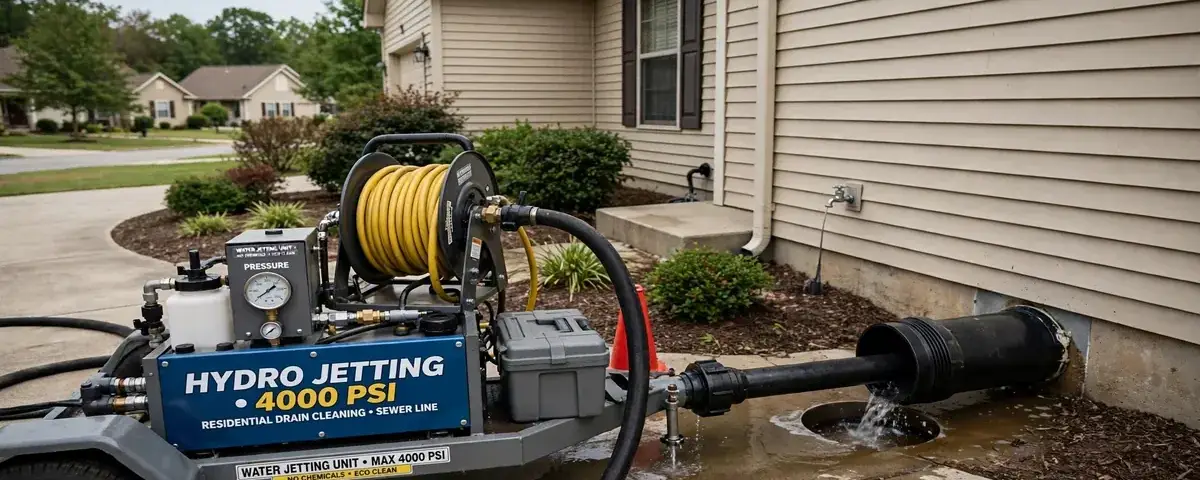
Hydro jetting is a drain cleaning method that sends high-pressure water through a nozzle to scour the inside of a pipe. In Randolph, NJ it is the usual answer when a main sewer line keeps backing up, because water reaches the full pipe wall where a cable only bores a hole.
Randolph Pro Plumbing dispatches licensed plumbers with jetting equipment day and night. A camera goes in first, so we know the pipe can take the pressure before the nozzle goes anywhere near it.
What a jetter does that a cable cannot
A cable machine pokes through the middle of a clog. The water around it often stays, and the remaining grease or scale is ready to catch the next load. A jetter fires streams backward as well as forward, which pulls the nozzle along the pipe and rinses the wall as it goes.
That is why jetting suits lines that clog on a schedule. If you have already paid for drain cleaning twice this year and the backup came back, the pipe wall is probably still coated.
Basement floor drain overflowing right now
Water rising in a basement floor drain or a ground-floor tub is the classic sign of a blocked main. Call before the water reaches stored items or a finished area. Stop using every fixture, because each flush and wash adds to the pool.
If the water smells of sewage, treat it as contaminated. Keep children and pets out, and wear boots and gloves if you must walk through it. We do not promise an arrival time, but dispatch starts the moment you call.
How a jetting visit runs
- 1
Find the access
The plumber locates a cleanout, or removes a toilet or opens a vent stack when none exists.
- 2
Look before jetting
A drain camera shows the clog, the pipe material and any cracks, offsets or sags.
- 3
Cut, then wash
A cutting head or cable breaks up the plug if needed. The jet nozzle then runs out and back along the line.
- 4
Check the result
A second camera pass confirms the wall is clean and shows whether anything needs repair.
Before the jetting crew arrives
1Clear the cleanout
Move anything stacked near the cleanout or basement drain so the hose can run straight in.
2Keep water off
No laundry, no dishwasher, no flushing until the line is open.
3Protect the floor
Lift boxes, rugs and electronics off the basement floor. Do not touch outlets near standing water.
4Say what you tried
Tell us about cables, chemicals or earlier jetting. It saves a step and avoids a chemical splash.
Jetting or cabling: an honest comparison
| Situation | Cable | Hydro jet |
|---|---|---|
| Single sink clog | Usually enough | Overkill |
| Grease coating a kitchen or main line | Opens a channel only | Cleans the full wall |
| Roots entering at a joint | Cuts the roots back | Clears debris after cutting, roots may regrow |
| Heavy scale or buildup | Scrapes some | Strips most of it |
| Cracked, collapsed or offset pipe | Can snag | Not suitable until repaired |
Roots are the exception worth knowing about. Jetting washes out the cut pieces, but a root that entered through a cracked joint will return until the joint is repaired.
When we will not jet your line
High-pressure water in a broken pipe makes things worse. It can wash soil out through a crack, enlarge a hole or push debris into a bad joint. If the camera shows a collapsed section or a badly separated joint, we stop and talk about sewer line repair first.
We also check with the camera if the pipe is old, thin or patched. A cable is gentler on weak pipe and may be the safer first move.
Main sewer cleaning and the Randolph connection
Jetting is mostly a main-line tool, running from the house toward the street connection. Randolph's sewer system has 82 miles of sanitary sewer and 10 pumping stations, and the township owns no treatment plant. What that means for you is simple. A blockage inside your property is a plumbing problem, and one beyond it is a question for the township's Division of Water and Sewer.
About 54 percent of the township's homes predate 1980. Houses that age often have had many years of use on one lateral, which is why a camera, then a sewer inspection if problems recur, comes before aggressive cleaning.
Pricing for a jetting visit
Jetting costs more than a basic cable run because it uses larger equipment and a camera. You hear the price before the crew starts.
A short run to a nearby cleanout is quicker than a long run to the street.
No cleanout means pulling a fixture or working from a vent, which adds time.
A pre-jet and post-jet look takes time but protects you from jetting a damaged pipe.
Thick scale or hardened grease needs more passes than loose debris.
After-hours dispatch carries extra staffing cost.
Policies differ. Many treat a sudden sewer backup differently from damage that built up slowly, and some exclude backup unless you added a rider. Read the policy wording before you call the agent.
Ask the dispatcher about the price range for your pipe, then call to get a plumber moving.
Call (908) 357-1542Hydro jetting questions, answered plainly
A method that sends pressurized water through a pipe to remove grease, scale, sludge and roots. A nozzle pulls itself along the line while water scours the wall, so the cleaning covers the whole pipe, not just a hole in the middle.
Yes. The dispatch line runs around the clock. Call, describe the backup, and a licensed plumber is sent when one is available.
On sound pipe, yes. On cracked, collapsed or thin pipe it can do harm. That is why a camera goes in first and we may choose a cable instead.
A snake cuts through a clog and leaves the coating. A jet cleans the wall. Jetting is for recurring main line problems, snaking for simple blockages.
There is no fixed interval. A line that backs up every few months benefits from jetting plus a camera to find the reason. A line that has cleared once may not need it again.
The price depends on line length, access, camera work, buildup and the hour of the call. You get a clear price before work begins.
It clears cut roots and fine hair roots. Thick roots are first cut with a cable head. Roots usually come back until the entry point is repaired.
If the main line is full or the floor drain is rising, call now and ask for jetting.
Call (908) 357-1542Standards and sources used on this page
- Randolph Township Water and Sewer page and Utilities Element