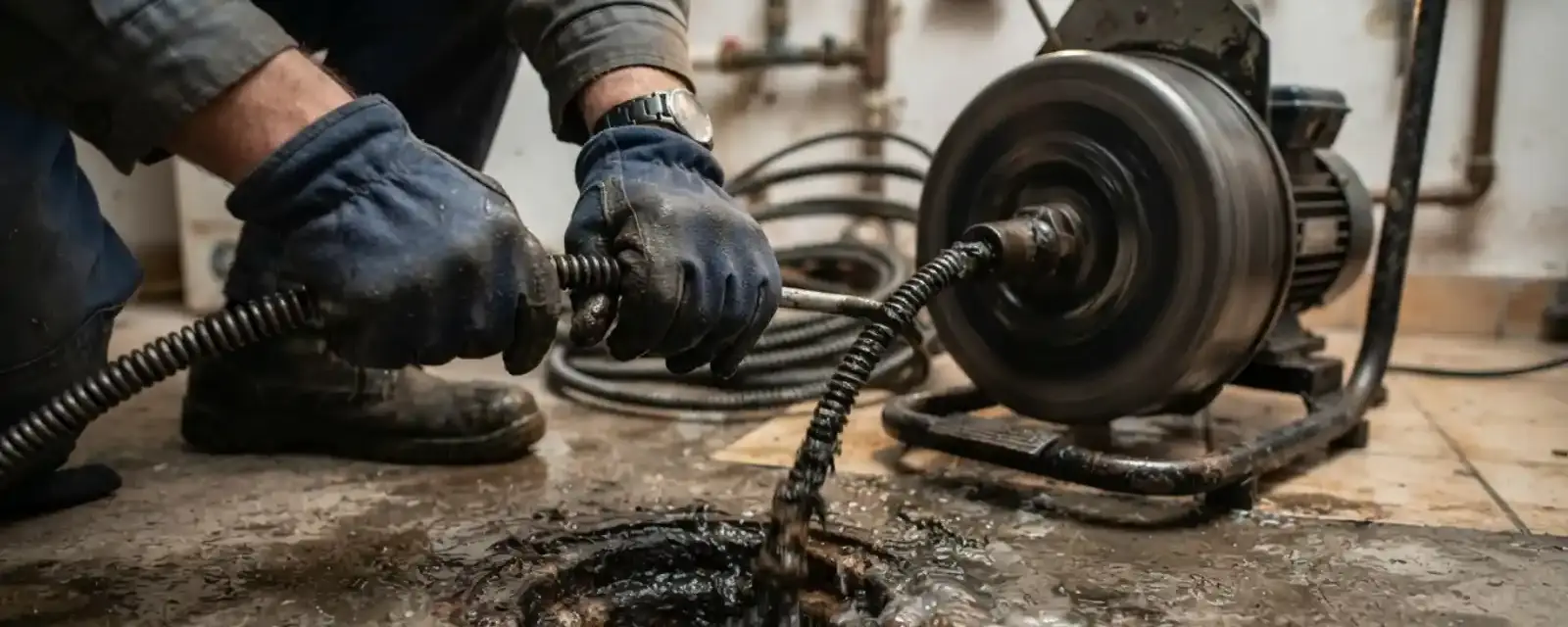
A smelly drain usually comes from one of four sources: a trap that has dried out, a film of grease and soap scum on the pipe wall, a vent that cannot move air, or sewer gas finding a way into the house. Run water in the fixture that smells for about a minute. If the odor fades and stays gone, the trap was simply dry. If it returns within hours, the cause is deeper in the line.
This guide is for Randolph, NJ homeowners who want to clean drains that smell without guessing. We cover how to tell the causes apart, what is safe to try yourself, what harsh chemicals risk, and when a camera look from our team saves time.
Check the P-trap before anything else
Every sink, tub and floor drain has a curved section of pipe that holds a small plug of water. That water seals the opening, so gas from the sewer or septic line cannot rise into the room. When the seal evaporates, the smell walks right in.
Guest baths, basement floor drains and laundry standpipes dry out most often because nobody uses them. A trap can also lose its seal if a vent is blocked and the draining water siphons it away. Pour a quart of water down the drain and give it a minute. If the odor was a dry trap, you are done.
A floor drain that dries out again every few weeks is worth a closer look. Pouring a little cooking oil on top of the water slows evaporation, but it is a patch. A recurring dry trap often points to a venting or siphon problem.
Match the smell to the likely cause
Where the odor shows up and what it smells like narrows the search quickly. Use this table before you buy anything from the hardware store.
| Where you notice it | What it smells like | Most likely cause | First move |
|---|---|---|---|
| One bathroom sink | Musty or sour | Buildup in the overflow and tailpiece | Clean the stopper and overflow, flush with hot water |
| Kitchen sink | Rancid or greasy | Grease and food film in the line | Hot water flush, then a baking soda and vinegar soak |
| Unused floor drain | Rotten egg or sewage | Dry trap | Refill the trap with water |
| Several fixtures at once | Sewage | Vent blockage or a partial main line clog | Stop using water and call a plumber |
| Whole house, worse after rain or laundry | Sewage or earthy | Main line problem or failing septic components | Camera inspection of the line |
| Gurgling plus smell | Sewage | Blocked vent or slow main line | Professional diagnosis |
Biofilm: the slime you cannot see
Soap, skin oils, toothpaste, hair and cooking fat leave a thin coat on the inside of a drain. Bacteria feed on that coat and form a slimy layer called biofilm. As it grows it produces the sour, musty smell people notice at a sink even when water drains normally.
Biofilm clings to the pipe wall, so water running past does little to remove it. A thin plastic drain brush, a hot water flush and an enzyme-based drain cleaner can break up light buildup. Enzyme products work slowly and need an overnight rest with no water running. They will not clear a real clog.
Heavy buildup is different. When grease and scale have narrowed the line, a cleaner cannot reach all of it. Our team uses cable machines for a standard clog and hydro-jetting when the pipe wall itself is coated, because high-pressure water scours the whole circumference rather than punching one hole through the middle.
Vent problems and sewer gas in plain terms
Drain pipes need air behind the water. A vent pipe runs up through the wall and out the roof so draining water can pull air in and keep the traps full. When a bird nest, leaves or ice block the vent, water drags the trap seal along with it and sewer gas comes through.
The clues are gurgling after a flush, a toilet that bubbles when the washer drains, and an odor that appears while water is running rather than after. Fixing it can mean clearing the vent from the roof, which is not a job to try on a ladder in wet weather.
Sewer gas that smells like rotten eggs can also come from a cracked drain line, a failed wax ring under a toilet, or a dry cleanout cap. A sewer inspection with a camera shows cracks, offsets and root intrusion directly, so you do not dig or tear out a wall on a hunch.
Randolph, NJ: sewer or septic changes who handles the smell
Randolph's township sewer system includes 82 miles of sanitary sewers and 10 pumping stations, and the township does not own a wastewater treatment plant. Most of the north and east, including the Route 10 area, falls in the RVRSA service area, and the southern half along Sussex Turnpike is in the Butterworth service area. Knowing your area tells you which system to ask about.
Other parts of Randolph are not sewered and rely on individual septic systems, which the township health department and NJDEP regulate. Morris County Health relays the DEP recommendation that the average septic system be inspected and pumped every 3 to 5 years by a professional. A sewage odor at drains in a septic home, especially with slow fixtures, is a good reason to check when the tank was last pumped before you blame the pipes.
Source type: Township Water and Sewer page, Morris County Health guidance
What harsh chemicals risk
Caustic drain openers are tempting at midnight, and they do clear some clogs. They also sit in a standing pool if the clog does not move, which can soften old pipe joints and make a later repair harder. If a plumber has to open a trap full of lye, that is a burn risk for the person doing the work.
Never mix cleaners. Bleach and ammonia-based products, or bleach and acidic products, release toxic fumes in a small bathroom. On a septic system, repeated bleach or solvent use can harm the bacteria that break down waste in the tank.
Cleaners also do not fix a vent, a cracked line or a dry trap. If one bottle has not worked, a second will not. Stop, ventilate the room, and tell the plumber what you already poured.
What works, in order
- 1
Refill the trap
Run water in every fixture that has not been used lately, including basement floor drains and laundry standpipes.
- 2
Clean what you can reach
Pull the stopper, wipe the overflow opening, and scrub the tailpiece with a brush and hot soapy water.
- 3
Flush and soak
Use very hot tap water, then an enzyme cleaner left overnight for light buildup.
- 4
Check the pattern
Note whether the smell appears at one drain or several, and whether gurgling comes with it.
- 5
Bring in a plumber
A smell at several fixtures, gurgling, or an odor that returns after cleaning calls for a camera look and a proper cleaning.
When a smelly drain needs a professional
Call when the odor returns after you refill traps and clean fixtures, when more than one drain smells, or when you hear gurgling. Call too if you notice sewage smell with slow draining, wet spots near a floor drain, or a toilet that bubbles. Those patterns mean the problem is past the fixture.
Our team starts with a conversation about where and when the smell appears, then cleans the line with the right tool and, when the cause is unclear, runs a camera through it. If the clog is a standard one, drain cleaning with a cable machine is often enough. We give a clear price before work starts.
Neighbors in Morris Township and Denville call us for the same odor problems, and the diagnosis steps do not change from town to town.
Smelly drain questions we hear
That pattern often points to a blocked or poorly working vent. Water leaving the pipe pulls air, and with no vent air to refill it, the trap seal gets pulled along and gas rises through the opening. It can also mean buildup that gets stirred up by warm water.
Yes. The water plug in the trap is the only barrier between the room and the drain line. Once it evaporates, even a small amount of sewer gas is easy to smell. Refilling it with water usually ends the odor right away.
It can loosen light buildup and freshen a kitchen sink, but it does not remove thick grease or biofilm from the pipe wall. Think of it as maintenance. If the smell returns in a day or two, the source is something more than surface film.
Sewer gas contains gases that irritate the eyes and throat, and a strong, lasting odor is not something to live with. Ventilate the room and have the source found. If you ever smell natural gas, which is a different smell, leave the building and call the gas utility or 911 from outside.
When the odor comes from grease, scale or biofilm coating the pipe, yes. Jetting scours the wall rather than boring a hole through the clog. It does not fix a dry trap, a blocked vent or a cracked pipe, which is why a camera look comes first when the cause is unclear.
They can. The Morris County Health guidance passes along the DEP recommendation to have an average septic system inspected and pumped every 3 to 5 years. If a sewage odor comes with slow drains and you cannot recall the last pumping, schedule that check alongside a plumbing inspection.
Still smelling it after you refilled the traps? Call us and describe where the odor shows up.
Call (908) 357-1542Standards and sources used on this page
- Randolph Township Water and Sewer page and Utilities Element
- Morris County Health Management, septic system maintenance guidance
- PSEG public safety guidance on gas leaks (used as a general reference)