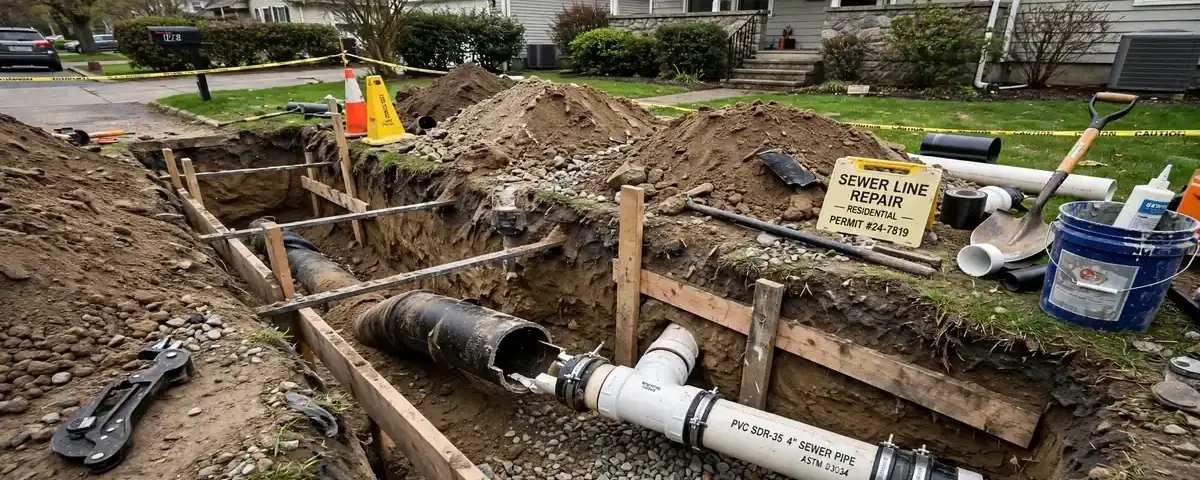
Hydro jetting is a way to clean a main sewer line with a hose that shoots high-pressure water from a nozzle inside the pipe. The water scours grease, scale, and soft debris off the walls and cuts through small roots, instead of just punching a hole through the clog the way a cable does.
For Randolph, NJ homeowners with a slow main line or repeated backups, jetting can clear a line more completely than snaking. It is not right for every pipe, so this post explains the difference, the limits, and why we put a camera in the line first.
Hydro jetting versus snaking: two different jobs
A drain snake, also called an auger, is a rotating cable with a cutting head. It pushes through a clog and pulls some of it out, which restores flow quickly. The pipe wall, however, is left coated with whatever the cable missed.
Jetting works the other way. A flexible hose with a forward and rear-facing nozzle travels down the line, and the water cleans the pipe wall as it goes and flushes debris toward the sewer. It is closer to power washing a pipe than to poking a hole in a plug.
| Situation | Snaking | Hydro jetting |
|---|---|---|
| First slow drain, no history of backups | Usually enough | Not needed yet |
| Same clog returns every few months | Clears it for a while | Better, because it cleans the wall |
| Heavy grease buildup in the main | Leaves a coating | Strong fit |
| Fine tree roots at a joint | Cuts a channel | Good at clearing, but roots may regrow |
| Cracked, collapsed, or offset pipe | Can snag or push through | Not safe until repaired |
| Very old or fragile pipe | Risky | Needs a camera check first |
Is hydro jetting safe for old pipes?
Properly done on sound pipe, jetting is safe. The risk comes from using it on a line that is already cracked, collapsed, or badly corroded, because moving water can enlarge a break or push debris into a gap.
That is why the first step is not water at all. We run a camera through the line and look at the pipe before any jetting starts. If the inspection shows a break, a belly, or a failed joint, the answer is repair or replacement, not more pressure.
We do not apply the same pressure to every line. Pipe material, diameter, and condition set the limits, and a plumber should be able to explain why a given setting is safe for your pipe.
Why a camera inspection should come first
- 1
Locate the cleanout
Find the access point, usually in the basement or near the foundation, and confirm the main line it serves.
- 2
Run the camera
A small waterproof camera on a flexible cable shows the pipe wall, joints, and obstructions in real time.
- 3
Diagnose
Roots, grease, scale, a belly where water collects, or a break each lead to a different fix.
- 4
Choose the tool
If the pipe is sound, jet it. If it is damaged, plan the repair. Our sewer inspection visits answer that question first.
Randolph, NJ: sewer service areas and what they change
The township's system has 82 miles of sanitary sewers and 10 pumping stations, and the township does not own a wastewater treatment plant. RVRSA serves most of the north and east portions, including the Route 10 area, and the southern half along Sussex Turnpike is in the Butterworth service area. Knowing which side you are on helps you ask the right authority about the main connection.
Remaining un-sewered areas generally rely on individual septic systems regulated by the township health department and NJDEP. If your home is on septic, jetting the line from the house to the tank is a different job from jetting a municipal lateral, so tell the dispatcher which system you have.
If a backup might involve the public main in the street, call the sewer provider for your area. A clean private line and a blocked public main need different fixes.
Source type: Township Water/Sewer page and Utilities Element
What actually blocks a main line
Grease
Cooking fat cools and hardens in the pipe, narrowing it over time. Jetting is strongest here.
Tree roots
Fine roots enter through joints in search of moisture. Jetting cuts them back, but they return unless the joint is repaired.
Scale and buildup
Mineral and soap scale thicken the pipe wall slowly and slow the flow for years.
Wipes and paper products
Flushed wipes catch on roots and rough spots and form a mat that no cable can fully remove.
What to expect on jetting day
The crew sets up at the cleanout, feeds the hose in, and jets in passes from the cleanout toward the sewer connection. You may hear loud water and see debris flushed out. Expect the work area, often a basement or utility space, to be covered and the floor protected.
When the passes are done, the camera goes back in to confirm the line is clear and to record the pipe's condition. That second look is the real proof of the work, and you should be shown it.
Do not run water, flush, or use the washing machine until the crew says it is safe. A jetted line is clear, but a cleanout left open can spill.
Roots and grease: why the clog comes back
A line that clogs again within months has not been fixed, it has been cleared. Roots return unless the joint they entered is sealed or the pipe is lined or replaced. Grease returns if the household keeps washing fat down the sink.
A repeat clog is the signal for jetting plus inspection, then a decision between periodic maintenance and a permanent repair. Our hydro jetting service and sewer line cleaning can be scheduled as a routine program if repairs are not yet needed.
Covering the area
Our team also handles sewer line calls in Rockaway Township and Denville, and the checks above apply the same way there.
Hydro jetting questions
For a repeat clog, grease, or scale, yes, because it cleans the pipe wall. For a first slow drain, a snake is often enough. A camera look helps decide.
On sound pipe, no. On a cracked or collapsed pipe it can make things worse, which is why we inspect before jetting.
It clears roots out of the pipe, but they can grow back through the same joint. A sealed joint, lining, or replacement is the lasting fix.
If you have had two or more backups, a sewer smell, or fixtures that gurgle together, an inspection is worth doing. It also shows the line's condition before you buy or sell.
It can be, but the setup differs. Tell the dispatcher you are on septic so the crew can plan the access and avoid flushing debris into the tank.
Most of the north and east, including the Route 10 area, is in the RVRSA service area, and the southern half along Sussex Turnpike is Butterworth. Some areas are septic only. Ask the township if you are unsure.
Repeat clog or backed-up floor drain? Call and ask about a camera check.
Call (908) 357-1542Standards and sources used on this page
- Randolph Township Water and Sewer page and Utilities Element