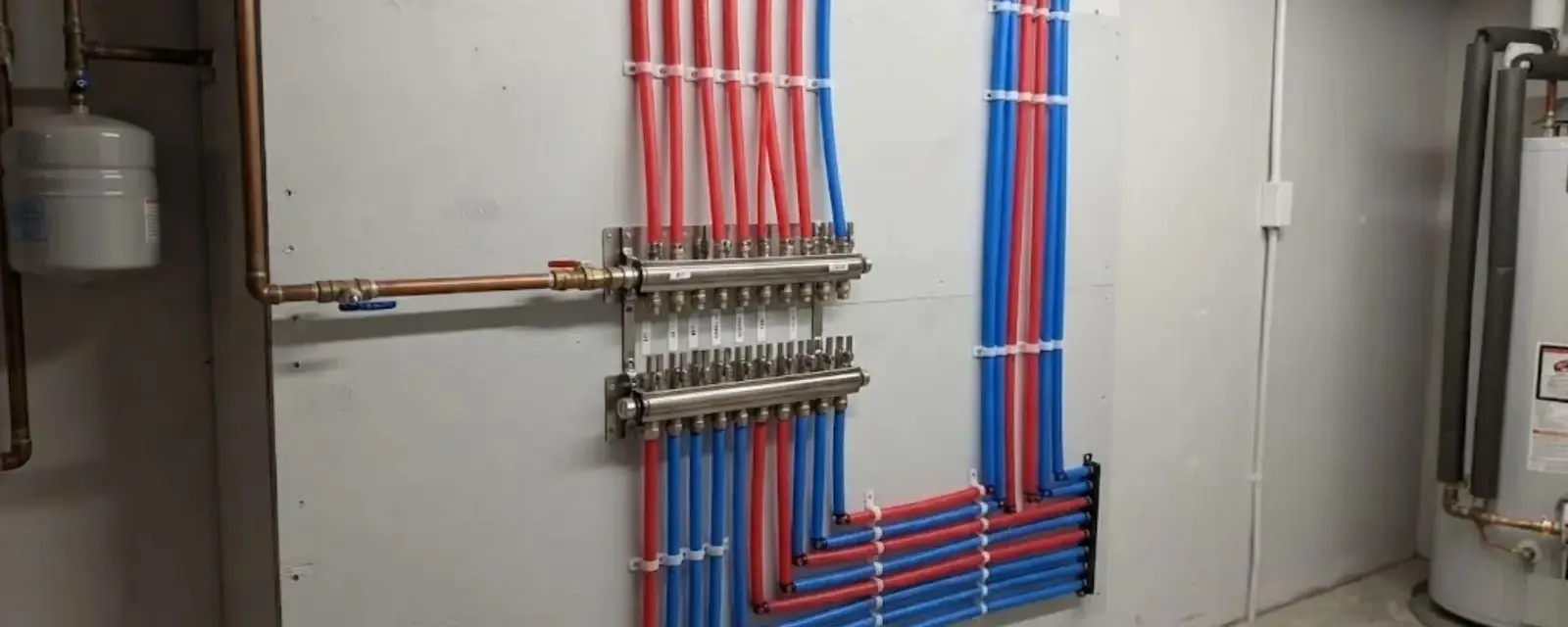
The plastic pipes used in home plumbing are PEX, CPVC, PVC and ABS. PEX and CPVC carry pressurized water to your fixtures, and CPVC and PEX are the two that handle hot water. PVC and ABS are drain, waste and vent materials that carry used water out of the house by gravity. If you are planning a repipe or a remodel in Randolph, NJ, that split is the starting point.
Below is a table, a short profile of each material, a way to choose between them, and the local steps to take before any piping is changed.
The four plastics side by side
| Pipe | Typical job | Hot water | Common look |
|---|---|---|---|
| PEX | Pressurized supply lines | Yes, designed for hot and cold | Flexible tubing, often red, blue or white |
| CPVC | Pressurized supply lines | Yes, rated for hot | Rigid, cream or light yellow |
| PVC | Drain, waste and vent, some cold water mains | No, not for hot lines | Rigid, white, often with printed marks |
| ABS | Drain, waste and vent | No, not for supply | Rigid, black |
This table describes typical use. It is not a statement that any one type is accepted for your project, which is a question for the local code official.
PEX: the flexible supply tubing
PEX stands for cross-linked polyethylene. It comes in coils, bends around corners, and can run long distances with few joints. That is why it shows up in repipes, where fewer fittings means fewer places to leak.
PEX carries both hot and cold water inside the house. It is not meant for drain lines, and it should not be left in direct sunlight because UV light weakens it. Fittings and connection tools vary by system, so a plumber matches the right ones to the tubing.
CPVC: rigid pipe that handles heat
CPVC is chlorinated PVC, and the added chlorine lets it carry hot water that plain PVC cannot. It is cut with a tubing cutter and joined with solvent cement. It is stiffer than PEX and needs more fittings and supports.
The trade-off is brittleness. CPVC can crack when it is bumped, over-tightened at a threaded joint or run through a cold, unprotected space. Homeowners who find it in an older house sometimes see small cracks at fittings, which is why many repipe jobs replace it.
PVC and ABS: the drain-side plastics
PVC and ABS do the same job at the drain. They carry waste and vent air in a house on a slight downhill slope. They are not used on hot water lines, and neither is meant for pressurized supply inside the building.
The two are not interchangeable at a joint without the right transition cement. PVC is white or gray and ABS is black. A plumber who sees both in one house usually finds a remodel from different eras.
A quick way to choose
Ask three questions in order. The first one eliminates half the list.
- Is the pipe under pressure, like a supply line, or does it drain by gravity? Pressure means PEX or CPVC. Gravity means PVC or ABS.
- Will hot water run through it? If yes, PEX or CPVC. PVC and ABS stay off the hot side.
- Where will it run? Tight bends and long open runs favor PEX. Exposed straight runs with plenty of support suit CPVC. Outdoor or sunlit sections need protection, whatever the plastic.
Existing materials matter as well. A house with galvanized steel or copper may transition to plastic at a defined point, and that joint needs the right fitting.
Randolph, NJ: code, permits and who may do the work
New Jersey's plumbing subcode is the National Standard Plumbing Code, 2021 edition (NJ edition), adopted in September 2022. We do not tell homeowners which plastic is accepted for which use. Ask the Randolph construction office, since the local enforcing agency decides, and have your plumber bring the material list to that call.
The same code sets hot water at not less than 120 degrees F and not more than 140 degrees F. That range matters for pipe selection, because supply material must tolerate the heater setting. Tell your plumber where the water heater is set so they choose tubing and fittings accordingly.
Randolph's permit page says that changing piping needs a construction permit and zoning approval, and it asks you to call during planning. The plumbing subcode form is signed and sealed by a licensed plumber unless a homeowner is doing work in an owner-occupied single-family dwelling. State rules also say plumbing work is for master plumbers or those working under one, with a homeowner exception for his or her own dwelling, so hiring a licensed plumber is the safe default.
Source type: NJ plumbing subcode text, township pages and N.J.A.C.
Plastic pipe problems you can spot
Pinhole or seam weep
A damp spot or stain at a fitting suggests a loose joint, a cracked fitting or a bad cement connection.
Cracked CPVC
Look for hairline splits at elbows and where the pipe passes through framing. Cracks often grow after a freeze or a bump.
Discoloration or sagging
Sagging drain lines can hold water and slow flow. Sun-faded PEX or heat-stressed fittings near a flue are warning signs.
Noisy pipes
Unsecured plastic can hum or tick when water runs. Extra hangers usually quiet it.
Where our team fits in
For a whole-house repiping job, we assess the existing pipe, pick a material with you, and plan the access points. New fixtures or a new run come under plumbing installation, where the permit and layout questions are handled before work starts.
A broken plastic line is a different job. If a joint lets go or a freeze splits a run, burst pipe repair is a call for right now. Close the main shutoff, open a faucet to drain pressure, and phone the 24/7 line. We serve homeowners in Morris Township and Dover as well as Randolph.
What to do before you cut or glue any plastic pipe
Plastic pipe looks simple, and that is where people get hurt or flood a basement. A few habits prevent most mistakes.
- Shut off the water at the main and open a low faucet to drain the line before you cut.
- Match the cement or fitting to the pipe material. Do not mix solvent cements across PVC and CPVC unless the label allows it.
- Ventilate the room and keep solvent cement away from flames, pilot lights and sparks.
- Do not run plastic pipe against a water heater flue or hot surface. Follow the manufacturer clearances.
- Remember New Jersey limits plumbing work to licensed plumbers, with an exception for a homeowner working in their own single-family home. Ask the township construction office whether a permit applies.
Plastic pipe questions
PEX is flexible tubing joined with crimp or clamp style fittings. CPVC is rigid pipe joined with solvent cement. Both carry hot and cold water, but they handle bends, supports and fittings differently.
No. PVC is for drains and some cold water uses. Hot lines use PEX, CPVC or metal.
Both carry waste and vent air. PVC is usually white and ABS is black. They need the correct cement when joined to each other.
It depends on installation, water conditions and exposure. No single plastic wins in every house, so ask your plumber about the specific run.
We do not state code acceptance for any plastic type. Ask the Randolph construction office, since the local enforcing agency decides, and share the answer with your plumber before the job.
The township says changing piping needs a construction permit and zoning approval. Call the Office of Construction Codes during planning to confirm what applies to your house.
Planning a repipe or chasing a cracked line? Call and describe the pipe you are looking at.
Call (908) 357-1542Standards and sources used on this page
- Randolph Township, Office of Construction Codes, construction permits page
- N.J.A.C. 13:32-1.4, plumbing practice rules
- N.J.A.C. 5:23-3.15 and NJ DCA code adoption table (National Standard Plumbing Code, 2021 edition)
- U.S. Consumer Product Safety Commission, tap water scald guidance