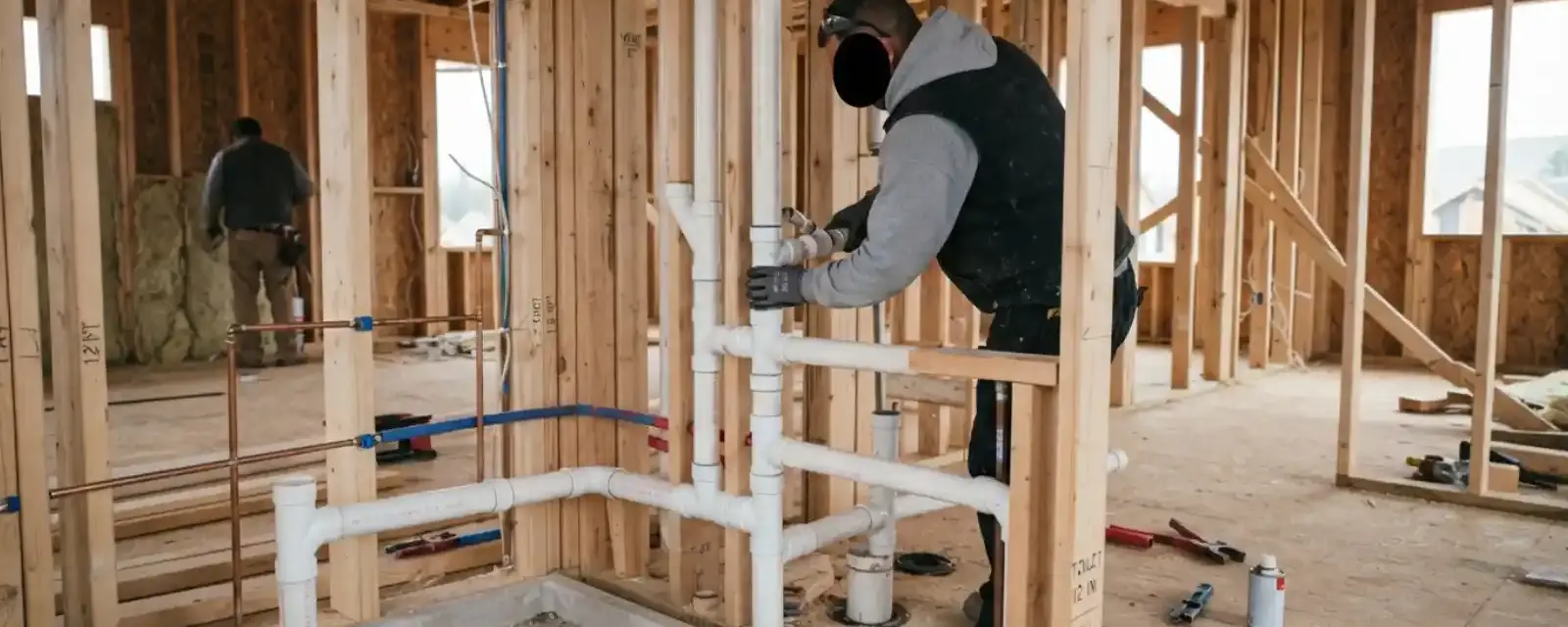
Plumbing installation covers adding or replacing the pipes, fixtures and connections that bring water and gas into a building and carry waste out. In Randolph, NJ that ranges from a new bathroom or kitchen to a gas line for a range, a backflow assembly for a commercial property, or the full rough-in for a new house.
New Jersey treats plumbing as licensed work, and the township has its own permit steps. We handle the installation and explain what the permit office needs, so the job passes inspection the first time.
Gas lines and gas leaks: leave first, then call
If you smell gas, leave the building at once. Move well away, because gas utility guidance is at least 350 feet, then call your gas utility or 911 from outside. Do not flip switches, light flames or start a car near the odor. Call a plumber only after the area is safe.
That order matters because a spark from a light switch or phone inside can ignite gas. We never promise a gas response time, since the utility controls whether the supply is safe.
For planned gas work, such as a new line to a range, dryer or fireplace, we size the pipe to the appliance load, pressure test the finished line and leave the connection ready for inspection. Gas is not available at every address, so we start by confirming what fuel your home uses.
What we install
| Installation | What it involves | Permit note |
|---|---|---|
| Bathroom or kitchen fixtures | Sinks, toilets, tubs, showers, faucets and supply connections | Ask the township, replacing fixtures directly can need a permit and zoning approval |
| Water heater | Tank or tankless unit, venting, gas or electric connections | Replacement needs a construction permit, no zoning approval |
| Gas line | New or extended pipe to an appliance, pressure tested | Confirm with the construction office |
| Backflow assembly | Device that stops used water from reversing into the supply | Planned testing visits |
| New construction | Underground and rough-in plumbing, then finish fixtures | Part of the building permit process |
For water heaters in particular, see our water heater installation page, which covers fuel type and sizing in detail.
Licensing and permits for plumbing work in Randolph
New Jersey rules say plumbing work shall only be performed by a master plumber, an authorized plumbing contractor or employees working under a master plumber's supervision. A single-family homeowner may do plumbing in his or her own dwelling, and unlicensed people may clear drain stoppages and a few other listed jobs. Anything beyond that, hire a licensed plumber.
Randolph's Office of Construction Codes says plumbing modifications or improvements, including replacing bathroom fixtures directly or changing piping, need a construction permit and zoning approval. Water heater and boiler replacement need a construction permit without zoning approval. The plumbing subcode form is signed and sealed by a licensed plumber, unless a homeowner does the work in an owner-occupied single-family home. The office suggests calling while you plan.
The code your installation is built to
New Jersey's plumbing subcode is the National Standard Plumbing Code, 2021 edition, New Jersey edition, adopted September 19, 2022. It sets how pipes are sized, vented and supported. One New Jersey amendment says hot water is potable water not less than 120 degrees F and not more than 140 degrees F, which affects how we set a new water heater.
The Consumer Product Safety Commission urges lowering water heaters to 120 degrees F. Most adults suffer third-degree burns from 2 seconds at 150 degrees F, 6 seconds at 140 degrees F and 30 seconds at 130 degrees F. For households with children or older adults, a lower setting is the safer choice.
Backflow prevention and testing
A backflow preventer keeps water that has left your system, such as from an irrigation line or a boiler, from being pulled back into the clean supply. Assemblies on irrigation systems, fire lines and commercial properties are commonly tested on a schedule.
We install and test these devices as a planned visit. The test checks that check valves seal and relief valves open at the right pressure. If you run a business, our commercial plumbing team handles backflow work along with other building systems.
Plumbing for new construction and additions
New construction plumbing happens in two stages. Rough-in goes in before walls close and covers drain, waste, vent and supply lines. Finish comes after, with fixtures, trim and final connections.
Both stages are inspected. Having the layout planned with the builder or architect early avoids moving walls to fit a drain. For an addition, we also check that the existing lines can supply the new fixtures at good pressure.
Installing in Randolph's mix of homes and sewer or septic
Township data shows 9,356 homes, with about 54 percent built before 1980. Older houses often need existing pipes inspected before new fixtures tie in, since an upgrade on tired pipe can shift pressure to the weak points. If an inspection turns up worn lines, we will discuss repiping before adding to them.
Where the home sits also matters for drains. The township sewer system covers much of the north and east, including the Route 10 area, while remaining areas are generally on septic. Tell us which applies, because it affects how a new bathroom's waste line is planned. We serve Rockaway Township and nearby towns with the same installation process.
Carbon monoxide alarms and fuel-burning appliances
New Jersey law requires carbon monoxide alarms in existing covered structures unless there is no carbon monoxide hazard. When we install or replace a fuel-burning water heater or other appliance, we check that venting is correct and that an alarm is present. A working alarm is cheap protection against a failed vent.
What shapes an installation quote
We price from the scope of the job, not a flat rate. You get a clear price before any work starts, and any changes are discussed first.
A faucet swap and a new gas line are very different jobs.
Sound pipe connects easily. Worn pipe may need replacing first.
Open framing and basements are quicker than finished walls.
Permit fees and inspection scheduling come from the township, not from us.
Fixture and appliance prices vary widely by brand and feature set.
Installations are planned improvements, so insurance rarely pays for them. If the work follows a covered loss, such as a burst pipe, your insurer may cover part of it. Check your policy before you start and keep the paperwork.
Call to describe the job and get a clear price before we schedule.
Call (908) 357-1542Installation questions, answered
The township says plumbing modifications and replacing bathroom fixtures directly need a construction permit and zoning approval. Call the Office of Construction Codes while you plan.
A single-family homeowner may do plumbing in his or her own dwelling. Permits and inspections still apply. For anything outside your own home, a licensed plumber is required.
Leave the building at once, move well away, then call your gas utility or 911 from outside. Do not use switches, flames or your car near the odor.
The type of installation, pipe condition, access, permits and the equipment you choose all matter. We give a clear price before work starts.
It checks that a backflow device is stopping reverse flow into the clean water supply. It is common for irrigation, fire lines and commercial properties. Ask us whether your property has an assembly.
New Jersey's code treats hot water as between 120 and 140 degrees F. The Consumer Product Safety Commission urges 120 degrees F because higher settings burn skin faster.
Yes, both rough-in and finish stages. Early coordination with the builder keeps the layout simple.
Have a project in mind? Call, describe it, and we will walk you through the permit steps.
Call (908) 357-1542Standards and sources used on this page
- Randolph Township, Office of Construction Codes, construction permits page
- Randolph Township Water and Sewer page and Utilities Element
- N.J.A.C. 13:32-1.4, plumbing practice rules
- N.J.A.C. 5:23-3.15 and NJ DCA code adoption table (National Standard Plumbing Code, 2021 edition)
- U.S. Consumer Product Safety Commission, tap water scald guidance
- FEMA guide to reducing basement flooding